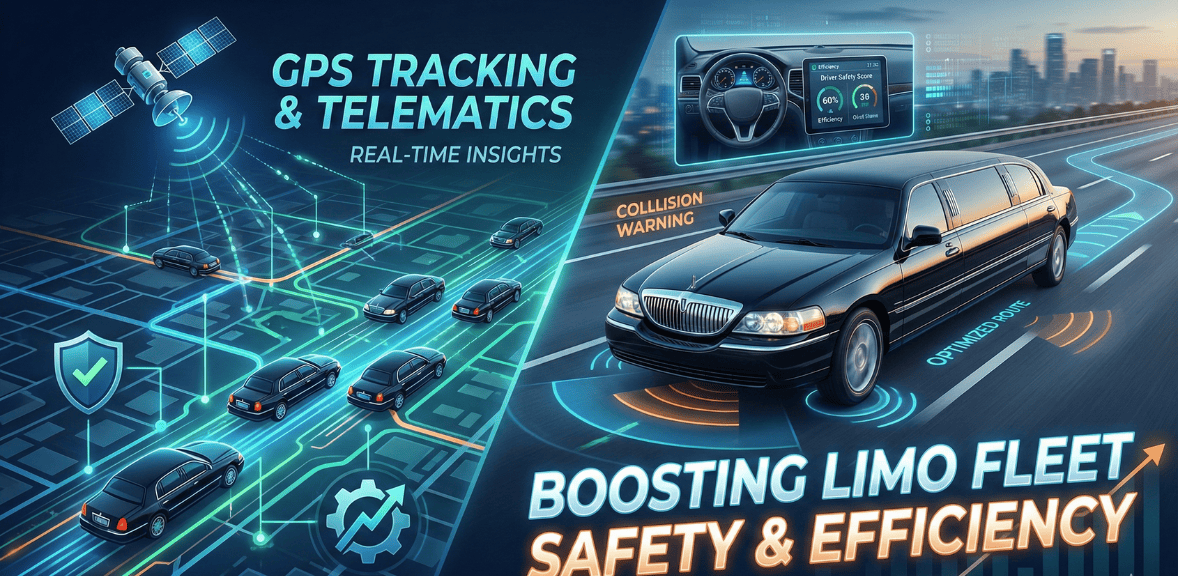
The limousine industry in the United States has changed significantly over the past decade. Client expectations are higher, competition is stronger, and operating costs are less predictable than ever. In this environment, running a successful limo business requires more than professional chauffeurs and luxury vehicles. It requires real-time operational awareness.
This is where limo GPS tracking and fleet telematics have become essential tools. What started as simple vehicle location technology has evolved into a comprehensive system for monitoring driver behavior, vehicle health, route efficiency, and overall fleet performance. Instead of relying on manual updates, assumptions, or after-the-fact reports, limo operators can now see precisely what is happening across their fleet at any moment.
A modern vehicle tracking system acts like a digital layer over daily operations. It quietly collects data from each vehicle and turns it into practical insights. These insights help improve limo fleet safety by identifying risky driving patterns early. They improve efficiency by reducing wasted fuel, unnecessary mileage, and poor routing decisions. They also support better maintenance planning by detecting mechanical issues before they become costly problems.
For many operators, telematics feels less like adding new technology and more like gaining visibility into parts of the business that were previously invisible. It does not replace human judgment, but it gives managers better information to make smarter decisions.
Real-Time Vehicle Location and Operational Transparency
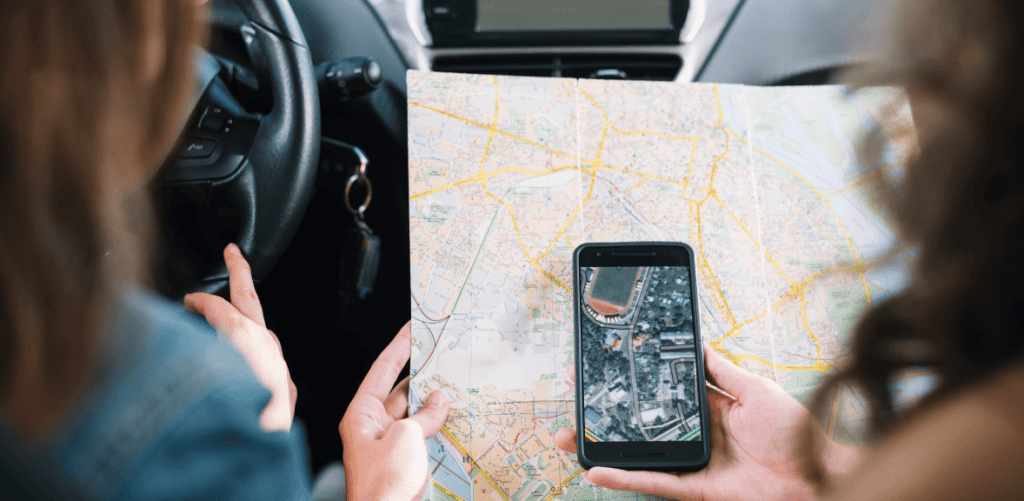
One of the most immediate and practical benefits of real-time vehicle tracking is operational visibility. In traditional limo operations, dispatchers often rely on driver check-ins, phone calls, or estimated schedules to determine vehicle locations. This creates delays, miscommunication, and uncertainty, particularly when multiple vehicles operate simultaneously.
With limo GPS tracking, every vehicle appears on a live digital map. Dispatchers can see precisely where each chauffeur is, if the car is moving or stationary, and how fast it is traveling. This changes how decisions are made throughout the day.
Instead of reacting after a problem occurs, dispatch can respond in real time. If a driver encounters unexpected traffic, the delay is visible immediately. If a vehicle takes a wrong turn or misses a pickup point, it becomes clear within seconds. This allows managers to reroute drivers, reassign jobs, or notify clients before frustration builds.
From a customer service perspective, real-time tracking creates a higher level of professionalism. When a client asks for an update, the answer is no longer based on estimates or guesswork. It is based on live data. Dispatch can confidently estimate how far away the chauffeur is and how long it will take for the chauffeur to arrive.
This transparency is essential for airport transfers, corporate bookings, and event transportation. In these scenarios, timing is critical, and slight delays can have significant consequences. Real-time vehicle tracking allows limo companies to coordinate arrivals, manage staging areas, and adjust schedules without relying on constant phone communication.
Over time, this visibility also improves internal accountability. Managers gain a clearer understanding of how routes are executed, how long trips actually take, and where inefficiencies occur. This information becomes the foundation for improving dispatch strategies and driver training.
Systems like Cloud Limo Manager often integrate real-time tracking directly into dispatch workflows, so location data appears alongside trip details and driver assignments. The value here is not in automation for its own sake, but in reducing blind spots across daily operations.
Driver Behavior Monitoring and Limo Fleet Safety
Safety is one of the most critical responsibilities in the limousine industry. Clients expect a comfortable ride but also want to arrive safely. While vehicle maintenance is part of safety, human behavior plays an even larger role.
Fleet telematics addresses this by monitoring how vehicles are being driven. Using onboard sensors, the system tracks speed, braking, acceleration, cornering, and idling. These metrics reveal driving habits that are often invisible during normal operations.
For example, a chauffeur who regularly brakes harshly may be following traffic too closely or driving too aggressively for road conditions. A driver who frequently accelerates rapidly may be increasing both fuel consumption and accident risk. A pattern of speeding may indicate pressure to rush jobs or a lack of awareness of safe driving standards.
Telematics systems record these behaviors and generate reports that show patterns over time. This allows managers to identify risk factors before they lead to incidents. Instead of waiting for an accident or client complaint, operators can address safety issues proactively.
The key benefit here is objectivity. Safety discussions become data-driven rather than emotional. Instead of relying on personal impressions, managers can refer to actual driving metrics. This makes coaching more constructive and less confrontational.
Some systems also provide real-time feedback to drivers. Audible alerts or dashboard notifications remind chauffeurs when they exceed speed limits or perform risky maneuvers. This acts as a digital safety assistant that reinforces good habits while the driver is still on the road.
From the chauffeur’s perspective, this can be protective rather than punitive. Telematics data can verify what actually happened in the event of disputes. If a client claims reckless driving or lateness, the system can confirm speed, route, and arrival time.
Over time, driver behavior monitoring contributes to a stronger safety culture. Chauffeurs become more aware of their habits. Managers rely less on assumptions. Safety becomes part of daily operations rather than an abstract policy.
In the US insurance environment, this data is also increasingly relevant. Insurers view telematics as a way to measure real-world risk. Fleets with consistent safe driving patterns often benefit from improved insurance terms, which directly affects operating costs.
Optimized Routing and Fuel Efficiency
Fuel is one of the most significant variable expenses for limo companies. Unlike fixed costs such as vehicle leases or insurance, fuel costs fluctuate constantly and are heavily influenced by driving behavior and routing decisions.
GPS fleet management plays a direct role in controlling these costs. By combining real-time traffic data with live vehicle locations, telematics systems help dispatchers guide chauffeurs to the most efficient routes at any given moment.
Instead of following static routes or personal preferences, drivers receive guidance based on current conditions. If congestion appears on a highway, the system suggests alternative routes. If an accident blocks a major road, the dispatcher sees it immediately and adjusts assignments.
This is particularly valuable in urban markets such as New York, Los Angeles, Chicago, Houston, and Miami, where traffic patterns shift throughout the day. Minor routing improvements on each trip can lead to substantial fuel savings over time.
Telematics also highlights inefficiencies that are not obvious in real time. Reports reveal patterns such as excessive idling, repeated detours, or consistently longer-than-necessary routes. These patterns often indicate training gaps or outdated habits.
For example, if data shows that certain chauffeurs spend long periods idling near hotels or airports, managers can adjust staging procedures. If a driver always takes a longer suburban route despite faster alternatives, the issue can be addressed through guidance and updated navigation practices.
Geofencing adds another layer of control. Virtual boundaries can be set around airports, event venues, restricted zones, or service areas. When a vehicle enters or leaves these zones, the system records the event. This helps ensure drivers follow assigned routes and avoid unauthorized detours.
Fuel efficiency also has environmental implications. Many corporate clients increasingly care about sustainability and emissions. Reduced fuel consumption means lower carbon emissions, supporting greener operations and enhancing brand reputation.
In integrated platforms such as Cloud Limo Manager, routing data often connects with trip history and billing systems. This allows companies to evaluate not only where vehicles went but also how efficiently revenue-generating trips were executed.
Maintenance Alerts and Vehicle Health
In the limousine business, vehicles are not just tools; they are high-value assets. Each vehicle represents a significant financial investment and directly influences brand image and service reliability.
Fleet telematics plays a critical role in protecting these assets by monitoring vehicle health in real time. Telematics devices connect to a vehicle’s onboard diagnostics system and collect data such as engine performance, battery levels, coolant temperature, and fault codes.
Instead of waiting for warning lights or breakdowns, the system detects potential problems as soon as they appear. If a mechanical issue is identified, an alert is sent to the fleet manager immediately.
This changes maintenance from reactive to proactive. Minor problems are addressed before they become expensive repairs. An engine warning can be investigated early. Low tire pressure can be corrected before it causes uneven wear or safety risks.
Telematics also automates maintenance scheduling. The system tracks mileage and engine hours, notifying managers when vehicles reach service intervals. This eliminates reliance on manual logs or memory.
For fleets with multiple vehicles, this is especially valuable. It ensures that no vehicle misses critical servicing, even when usage varies across drivers and routes.
Over time, telematics data also reveals long-term patterns. Managers can see which vehicles experience frequent issues, how driving behavior affects wear, and which models perform best under real-world conditions.
This supports smarter decisions about fleet expansion, vehicle replacement, and warranty management. Instead of relying on general assumptions, operators use actual performance data from their own operations.
When vehicles are healthier, operations become more stable. There are fewer breakdowns, fewer emergency substitutions, and fewer client disruptions. In an industry built on reliability, maintenance intelligence becomes a competitive advantage.
What Is Telematics and How Is It Different From GPS Tracking?

Telematics refers to the technology used to collect, transmit, and analyze data from vehicles using communication networks. It combines GPS location with onboard sensors and diagnostic systems to create a continuous flow of operational information.
Basic GPS tracking focuses mainly on location. It answers the question of where a vehicle is and how fast it is moving. This is useful, but limited.
Fleet telematics goes much further. It tracks how the vehicle is being driven, how efficiently it is used, and how well it performs mechanically. It captures behavior, performance, and health data simultaneously.
In a limo context, this distinction matters. Knowing that a car is late is helpful. Knowing why it is late is far more valuable. Telematics reveals whether delays are caused by traffic, poor routing, aggressive driving, or mechanical issues.
Telematics systems also store historical data. This allows operators to analyze trends over weeks and months instead of reacting only to daily events. Patterns emerge that reveal deeper operational strengths and weaknesses.
In practical terms, GPS is a feature. Telematics is a management system.
Also read: How to Build a High-Converting Online Booking Experience for Car Services
How GPS Tracking Improves Customer Service
Customer service in the limo industry depends on reliability and communication. Clients expect accurate arrival times, smooth coordination, and quick responses to changes.
Limo GPS tracking directly supports these expectations. Dispatch teams always know where vehicles are and how quickly they are moving. This allows them to provide precise ETAs and immediate updates.
When issues arise, such as traffic delays or location confusion, dispatch can intervene instantly. They can guide drivers to correct locations, reassign vehicles, or inform clients before frustration builds.
This responsiveness becomes part of the brand experience. Clients associate the company with professionalism, transparency, and control.
In competitive US markets, where clients often compare multiple providers, these operational details strongly influence loyalty and repeat business.
The Strategic Role of Telematics in Limo Operations

Telematics is not just about tracking vehicles. It is about understanding operations.
It gives managers visibility into previously hidden safety risks, inefficiencies, and mechanical issues. It transforms daily decisions from guesswork into data-driven actions.
For US limo operators facing rising costs, increasing competition, and higher client expectations, fleet telematics becomes a strategic tool. It supports safer chauffeurs, healthier vehicles, and more efficient dispatch.
When used thoughtfully, without excessive control or sales-driven motives, telematics becomes an educational system for the entire organization. It teaches drivers how to improve habits, managers how to optimize workflows, and companies how to deliver more reliable service.
In that sense, GPS fleet management is not about surveillance. It is about intelligence. And in an industry where every mile, minute, and decision matters, that intelligence becomes one of the most valuable assets a limo company can have.
Conclusion
GPS tracking and fleet telematics have become foundational tools for modern limo operations in the United States. They provide real-time visibility into where vehicles are, how they are being driven, and how well they are performing. This allows operators to shift from reactive management to proactive control, where safety risks are addressed early, inefficiencies are corrected continuously, and vehicle health is protected through data-driven maintenance. Instead of relying on assumptions or manual updates, limo companies can base decisions on real operational insights. Over time, this leads to safer chauffeurs, more reliable service, lower operating costs, and stronger customer trust. Telematics does not replace experience, but it enhances it by giving managers the clarity they need to run smarter, more resilient fleets.
FAQs
Q1: What is the main benefit of limo GPS tracking for fleet managers?
The main benefit is real-time visibility. Managers can see exactly where each vehicle is, which improves dispatch decisions and reduces delays. It also helps provide accurate ETAs to clients and respond quickly to unexpected changes. Over time, this visibility leads to more efficient and organized operations.
Q2: How does fleet telematics improve limo fleet safety?
Fleet telematics monitors driving behavior such as speeding, harsh braking, and rapid acceleration. These patterns often indicate higher accident risk. By identifying them early, managers can coach chauffeurs before incidents occur. Telematics also monitors vehicle health, reducing safety risks from mechanical failures.
Q3: Is GPS fleet management practical for small limo companies?
Yes, even small fleets benefit from GPS fleet management. It helps improve coordination, reduce manual communication, and optimize routing. Small operators gain better control over schedules and service quality without increasing administrative workload.
Q4: Do chauffeurs usually resist telematics systems?
Some drivers are cautious at first, but most adapt quickly when the system is adequately explained. When telematics is positioned as a safety and support tool, chauffeurs often see its value. It protects them from false complaints and creates fair evaluations based on real data.
Q5: Can telematics actually reduce operating costs?
Yes, telematics reduces costs by improving fuel efficiency, preventing major repairs, and lowering accident-related expenses. It also increases operational efficiency, allowing companies to serve more trips with the same resources. Over time, these savings often exceed the cost of the system.