
By John James April 21, 2026
Searching for Limo Anywhere alternatives may seem like a nuisance, but in all likelihood, you’re looking for an upgrade. Mental relief from cumbersome workflows. Mental relief from your patchwork booking, dispatch, and billing systems. Mental relief from slow processes that create mistakes when your team is at its busiest.
For software developers, your limo and chauffeur operations aren’t simply an office technology problem, but an interaction problem. It affects the customer experience, driver experience, and all back-office tasks. When a system that handles reservations is separate from the one that does dispatch, and there is still a different one for invoicing, that is when the cracks start to show. Missed trips, delayed updates, pay cycle bottlenecks, and staff wasted time on low-value tasks.
Simplification is key to eliminating frustration, increasing clarity, and streamlining business operations at every stage of a trip.
This is the goal of modern limo software: to unify operations in a single system. This guide outlines how an all-in-one system will benefit you, how to identify the right components for a modern solution, and how to maximize the benefit of your growing fleet.
Why Operators Are Looking Beyond Limo Anywhere

Limo Anywhere has a history that dates to the early days of the chauffeur transportation industry. Because it helped manage bookings, dispatching, and some of the operational workflows, many defaulted to it. Smaller fleets or simpler operational needs often may have worked for a period.
But business growth changes expectations. Operators want faster customer communication and updates, better mobile access, improved communication and system access, and greater integration. An abundance of recent market comparisons and competitor assessments highlight the same reasons. Lack of responsiveness, understaffed support, rigid systems, and poor integrations lead to limited customization and outdated user experiences.
This is all critically important because a modern limo business runs on speed and coordination, not just dispatch. Bookings need to flow seamlessly into driver assignments, and driver movements need to automatically update the system, reflecting billing without manual intervention. This is where many modern limo dispatch systems have improved efficiency. The best systems have moved beyond being just a dispatching tool to become the business’s operating system.
What Makes a Strong All-in-One Limo Platform
What sets apart all-in-one platforms is their ability to integrate all components of the trip into a single platform. A customer books a ride. The reservation has been entered into the system. Dispatch sees it. Drivers are notified via a mobile app. There are fewer manual handoffs during billing. That level of system cohesion minimizes billing errors and reduces manual work.
Operators looking for black car software today are searching for more than simple dispatching. They want a booking system that can be branded for the customer and feels modern. They want driver applications that enhance communication. They want fully automated invoicing, payments, reporting, and trip tracking. They want versatile software that accommodates airport transfers, corporate travel, recurring bookings, cross-partner affiliates, and the ability to add multiple vehicles to a single booking without sacrificing ease of use as the company scales.
Also, adaptability is a significant consideration. Not every operator uses the same business model. Some specialize in executive travel, while others focus on events and hourly charters, or deal with a combination of retail, corporate, and partner. Consequently, the software must support a range of flexible workflows, adaptable pricing, and scalable operational structures. Feedback and comparative analysis across the industry indicate that operators tend to leave older platforms when they feel boxed in by inflexible workflows or outdated design.
A to Z Dispatch
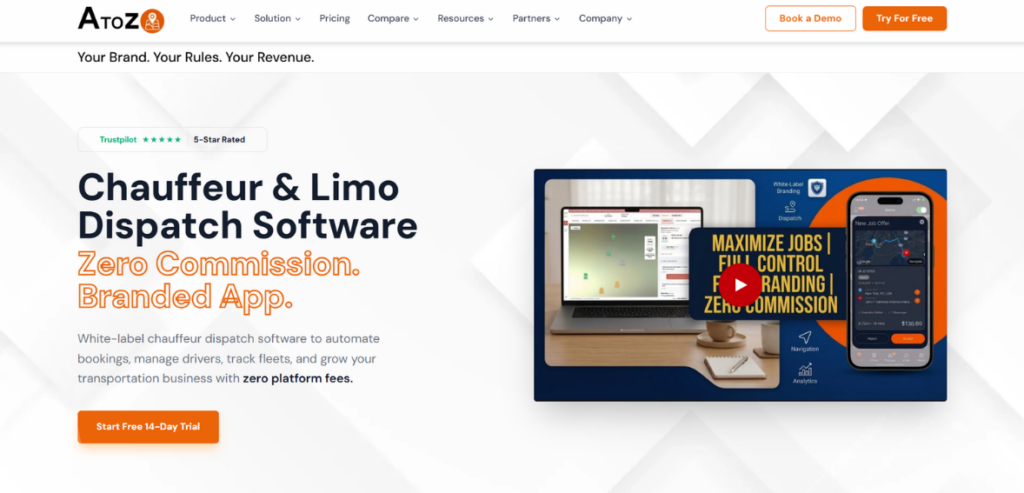
Image source
A to Z Dispatch is one of the most recognized names in newer alternatives to Limo Anywhere. Their positioning is obvious. They are looking to offer operators the most complete platform possible, combining booking, dispatch, customer management, driver features, and billing all in one place.
A primary strength is focus on the practical needs of operators. The platform is designed to provide cloud access, customer booking features, real-time driver and fleet management, integrated payments, booking schedules, and reporting. Comparative analyses are published that emphasize lower costs and greater transparency, particularly for smaller and medium-sized operators who feel the most pressure from rising software costs. As understood from the available product details, A to Z Dispatch aims to minimize reliance on multiple products to fully integrate daily workflows into a single environment.
For operators that want a system that integrates dispatch and administration, that is a key consideration. It closes the gap between the front-end reservation system and back-office processing, minimizing the need for staff to manually transfer data between systems.
Moovs
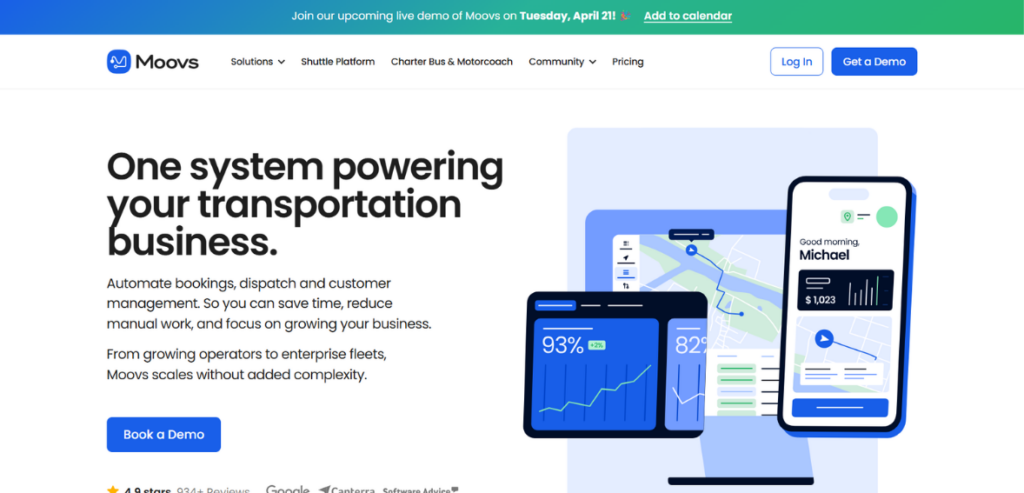
Image source
Moovs distinguishes itself as a notable contender in the modern chauffeur software market by not just simplifying legacy replacements. With thoughtful design, the platform enhances the digital experience for operators, passengers, and drivers. This design makes it appealing for companies looking for software that goes beyond being a utility.
Moovs is positioned as a modern, design-focused platform with a minimalist design that offers improved booking flows, enhanced usability, and managed trips for a more modern approach. However, the modern design is not an illusion; it is a more modern approach that rethinks the structure of reservations, dispatch, and payments. This is often what businesses want but cannot achieve in legacy systems built for modern needs that have been bloated with temporary solutions rather than consolidated into a streamlined modern system.
For limo software comparisons, Moovs is the best choice when a brand’s image and customer-facing booking systems are as valuable as the internal systems. Using Moovs not only enhances the customer experience but also makes back-office work more manageable.
Yelowsoft
Yelowsoft focuses on chauffeur and limo businesses needing more scalability and flexibility from their systems than older systems provide. Its comparison content canvases searches for alternatives around popular operator pain points such as usability, customization, integrations, support, and growth limitations.
This perspective is valuable because it describes how real business decisions are made regarding software. Most users do not abandon software due to minor missing functionality. They switch because the overall experience becomes more frustrating than it should. A dispatcher feels the software is making them slower. A billing team has to do the same job twice. A manager has to wait too long to get a clear picture of what is going on. A growing fleet quickly encounters software limitations that are not evident at the start.
Yellowsoft aims to engage in a business model conversation that is flexible enough to operate within the end user’s business model. For customers with more intricate workflows, partner collaborations, or operational growth in multiple locations, this level of flexibility can be a key differentiator. Competitive positioning indicates that demand for this type of solution is increasing rapidly. Operators increasingly prefer the ability to scale over individual use.
LimoFlow
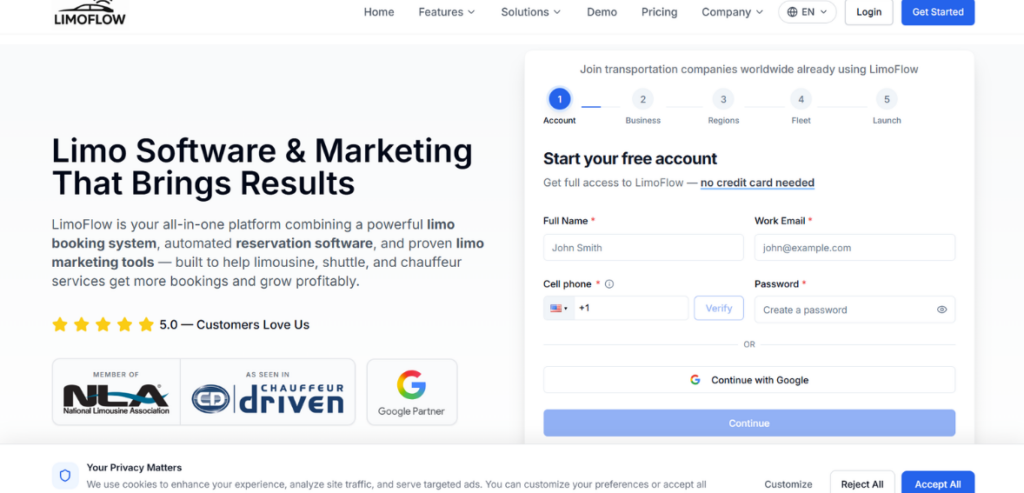
Image source
LimoFlow is another emerging name in the industry that places great emphasis on what it considers a next-generation booking and dispatching system. Their public image is guided by a next-generation user experience enabled by design automation, mobile deployments, cloud-based solutions, and an accelerated pace of iterative product enhancements.
A closing thought about LimoFlow is the strong emphasis on automation. That is true for dispatching, invoicing, customer management, and trip visibility. For operators fed up with the manual leg of the trip, this is a significant change. The value of software investments is not solely in helping employees to do the work. The value lies in the overall reduction in redundant work.
The comments received from LimoFlow just now prove how modernized customer expectations are. Passengers want a seamless booking experience. Drivers want effective mobile tool solutions. Operators want instant access to real-time trip status, payment, and customer history. Being built around customer expectations is a major strength for operational and customer-experience-focused businesses. limoflow.com.
Other Noteworthy Limo Software Alternatives
Additional limo dispatch software options are entering the market and becoming increasingly competitive, which benefits limo operators. Business comparisons mention Jugnoo, Limo Express, All Ride, Ground Alliance, RideScheduler, LimoLive24, Book Rides Online, and LimoShark in various market verticals. Some are a better fit in fewer verticals. Some are stronger in large fleet operations. Some focus more on outsourcing, AI dispatch, or vertical-specific processes.
The options available in the market allow operators to choose a full-fitting system rather than a patchwork one. The market includes systems designed for fleets of various sizes, service models, and operational complexities. More options mean operators can better choose systems that align closely with how their operations run.
How to Select the Most Suitable Limo Anywhere Alternative
Determining which Limo Anywhere competitor to select starts with one question. Where in your operation are you feeling the most friction?
If your challenge is with disconnected systems, you should look for tools that integrate booking, dispatching, and billing. If you are concerned about your growth, look for systems with scalable, customizable features. If your challenge is the experience, you need to examine the booking process, customer communication tools, and the quality of the mobile application. If the problem is with your employees’ workload, focus on the level of automation and reporting.
Your budget is an important factor in choosing an application, and while the price should not be the sole determining factor in the comparison. Inexpensive software can quickly become expensive, leading to more manual work, billing mistakes, and missed trips. A better method for assessing cost is to determine the cost in relation to the time saved, mistakes avoided, and the increased transparency across the entire operation.
When considering different applications, always look at potential needs, not just the current one. An application that is suitable for 10 vehicles and better will not be suitable for 30 vehicles. For example, a system that can handle simple reservations may not be able to handle corporate accounts, recurring trips, affiliate bookings, and complicated billing rules. The best black-car software is the one that allows migration to be avoided for the next year.
Why All-in-One Systems Are Important
The all-in-one model is gaining significant importance in the current market. Businesses are being transformed to do more with less. For example, customers want better communication and faster confirmations. Drivers require immediate updates on the job. Office staff wants accurate billing without reconciliation. The managers want real-time access to all business.
When there is a single platform for booking, dispatch, and billing, there is greater control over operations. This eliminates confusion and streamlines collaboration across teams, particularly during high-volume periods. It also improves operational efficiency and service quality. A single, consolidated platform results in a single source of truth.
This operational clarity is the main reason why today’s best limo software alternatives are in demand. The operators are not looking for one-off solutions. They are looking for a comprehensive, whole-business software solution.
When looking for the best Limo Anywhere alternatives, operators are seeking software built for how modern chauffeur and limo companies operate. They want fewer manual steps, fewer disconnected tools, and fewer bottlenecks between reservation, dispatch, and payment.
Fully integrated systems are shifting the market for limo operations software. A to Z Dispatch, Moovs, Yelowsoft, and LimoFlow are all part of the same movement toward stronger automation and better user experience. They all address the same industry demand for integrated booking, dispatch, and billing.
If your platform does not support your team’s efficiency and requires excessive manual work, the best limo dispatch software is the solution. It should also provide your business with a more reliable operating model.
Frequently Asked Questions
What are the most suitable alternatives to Limo Anywhere for small to medium operators?
Some new contenders in the market include A to Z Dispatch, Moovs, Yelowsoft, and LimoFlow. Depending on your priority for cost, customer experience, automation, or future scalability, each may be your best option.
Why are operators looking for alternative limo software?
As a fleet grows, operators are looking for more user-friendly software, more functionality for customization, more contemporary mobile features, enhanced service, and more integration on the tools to book, dispatch, and bill.
What features should black car software have?
Your software should integrate reservations, driver assignments, customer messaging, payments, and analytics into a single platform. Consider mobile accessibility, automation, and flexible workflows to allow the system to adapt and support your growth.
Is it better to use an all-in-one limo dispatch software rather than several tools?
Yes, for most operators, an integrated or connected system can reduce manual work, reduce errors, speed up the billing cycle, and provide better visibility into the whole trip for all teams. This can enhance customer service and internal efficiency.